Conformation 101: What Bloodstock Teams Look For
When bloodstock professionals evaluate a Thoroughbred, they are looking at much more than whether the horse is attractive or well-proportioned. Conformation, the way a horse is physically built, can offer clues about how efficiently the horse may move, how well its body may handle the demands of training and racing, and where potential strengths or limitations may exist.
Conformation is only one piece of the evaluation process. Pedigree, veterinary findings, athleticism, temperament, and overall development are also important. No horse is built perfectly, and successful racehorses come in many different shapes and sizes. The goal is not to find a horse without flaws, but to determine whether the horse’s overall structure is functional, balanced and appropriate for its intended use.
What Is Conformation?
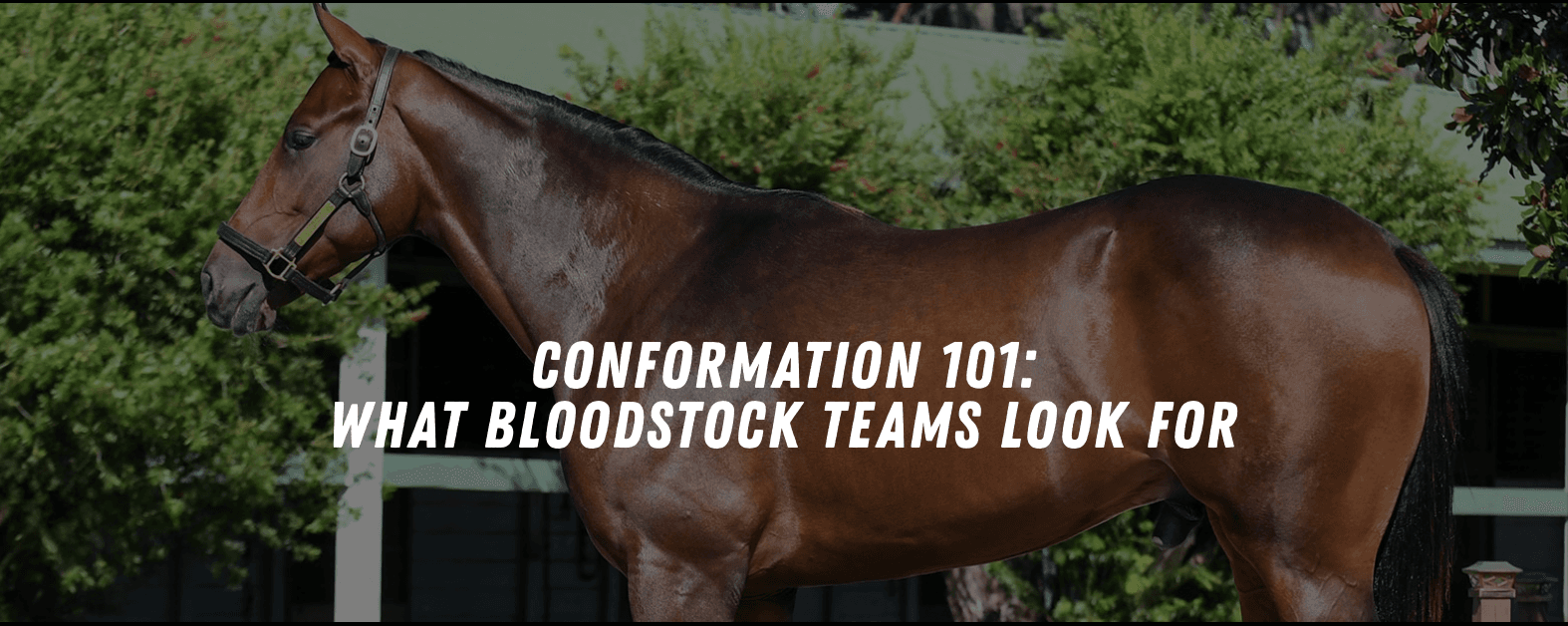
Conformation refers to the shape, alignment, and proportions of a horse’s body. Bloodstock teams typically evaluate the horse from the side, front and rear, both while standing and while walking.
They are assessing how the horse’s individual body parts fit together and whether the horse appears capable of moving efficiently. They may also consider how the horse’s structure could change as it matures, particularly when evaluating yearlings or young horses that are still developing.
Overall Balance
One of the first things evaluators look for is balance.
A balanced horse appears proportionate from front to back. The neck, shoulder, back, hindquarters, and legs should work together as one athletic unit rather than making one area of the body appear noticeably heavier, weaker, or out of proportion.
Balance can affect how easily a horse carries itself, changes direction, and transfers power from the hind end through the rest of the body. Bloodstock professionals are often less concerned with exact measurements than with whether the horse’s overall frame looks harmonious and functional.
The Shoulder and Front End
The shoulder plays an important role in a horse’s stride and ability to reach forward. Evaluators generally look for a shoulder with good length and slope, which may allow for smoother, more efficient movement.
They will also examine the chest, forearms, knees, cannons, and pasterns. The front legs absorb a significant amount of impact during training and racing, so alignment is closely evaluated.
Bloodstock teams may look for:
- Knees that appear properly positioned and supported
- Straight, well-aligned cannon bones
- Adequate bone and substance for the horse’s size
- Pasterns with a functional angle and length, generally matching the angle of the shoulder
- Feet that are proportionate and appear balanced
Minor deviations are common. The key question is whether a structural feature is likely to interfere with movement, increase stress on certain joints, or require additional management.
The Back and Body
The back connects the horse’s front end to its hindquarters and helps transfer energy through the body. Evaluators often prefer a back that appears strong and appropriately proportioned- not excessively long, weak, or dipped.
The depth of the horse’s body is also considered. A deep heart-girth provides space for the heart and lungs, while a well-developed barrel can contribute to overall strength and capacity.
However, young horses may still be growing unevenly. A yearling may appear higher in the hindquarters than the withers during a growth phase, so evaluators must distinguish between temporary immaturity and a more permanent structural concern.
The Hindquarters
The hindquarters are the horse’s primary source of propulsion. Bloodstock teams look closely at the hip, pelvis, gaskin, and hock because these areas help generate speed and forward motion.
A strong hind end generally includes:
- Good length through the hip
- Adequate muscle through the gaskin and thigh
- Hocks that are well-positioned beneath the body
- A hind leg that tracks forward efficiently
The angle and placement of the hind limbs can influence how a horse pushes off the ground. Evaluators will watch for whether the horse steps underneath itself or moves in a way that places unusual stress on the hocks, stifles, or lower limbs.
Legs and Joint Alignment
Leg conformation receives considerable attention because the limbs must withstand repeated high-speed impact.
Bloodstock professionals examine the horse from multiple angles to assess whether the legs are straight and whether the joints appear centered over the bones beneath them. They may note features such as knees that turn inward or outward, toes that point in or out, offset knees, or hind legs that stand too far beneath or behind the body.
These findings do not automatically disqualify a horse. Many successful racehorses have less-than-perfect leg alignment. The significance depends on the severity of the feature, how the horse moves and whether veterinary imaging identifies related concerns.
Feet
The old saying “no foot, no horse” reflects how important hoof quality is to a horse’s long-term soundness and performance.
Bloodstock teams look at:
- Hoof size and shape
- Heel depth
- Sole quality
- The angle of the hoof in relation to the pastern
- Whether the left and right feet appear reasonably symmetrical
- Evidence of cracks, uneven growth or previous corrective work
A horse with small, thin-soled, or poorly balanced feet may require more specialized farrier management. That does not mean the horse cannot race successfully, but it may factor into the overall assessment.
How the Horse Walks
Standing conformation tells only part of the story. Watching the horse walk can reveal how its structure functions in motion.
Evaluators typically observe the horse walking toward them, away from them and from the side. They are looking at:
- Whether the horse walks freely and confidently
- The length and rhythm of the stride
- How the legs travel through the air
- Whether the horse tracks straight
- Whether the hind feet step into or beyond the prints of the front feet (known as an overstep)
- Any signs of stiffness, restriction or unevenness
Some horses with noticeable conformational deviations move surprisingly well, while a horse that appears nearly ideal while standing may not move as efficiently as expected. Movement often helps place individual physical traits into better context.
Athleticism and Presence
Conformation is not evaluated in isolation from the horse’s behavior and athletic presence.
Bloodstock professionals notice how the horse uses its body, responds to its handler, and carries itself in a busy environment. A young horse that appears alert, coordinated, and confident may stand out, even if it is not the most physically imposing horse in the group.
Evaluators may also consider temperament. Racing requires horses to adapt to travel, new surroundings, crowds, training routines, and pressure. While behavior at a sale or inspection is only a snapshot, it can still provide useful information.
Conformation and Veterinary Findings
Conformation evaluation and veterinary examination often work together.
A bloodstock team may identify a physical feature that prompts closer review of a particular joint or structure during the pre-purchase examination. Likewise, veterinary imaging may help determine whether a conformational trait is primarily cosmetic or whether it is associated with an underlying concern.
The significance of any finding depends on the individual horse. Factors may include:
- The horse’s age and intended racing schedule
- Whether the finding is developmental or permanent
- The presence of inflammation or active disease
- How the horse moves
- The likelihood that the issue can be managed
- The purchase price and level of risk the buyer is willing to accept
The objective is not to eliminate every possible risk. Horse ownership always involves uncertainty. The goal is to understand the horse as fully as possible before making a decision.
There Is No Perfect Horse
One of the most important lessons in conformation evaluation is that perfection is extremely rare.
Some elite racehorses have had unconventional builds, unusual movement, or physical traits that might have caused buyers to hesitate. At the same time, many beautifully conformed horses never reach their expected level of performance.
Conformation can help bloodstock teams assess risk and athletic potential, but it cannot predict racing success on its own. Heart, speed, health, training, opportunity, and countless other factors ultimately shape a horse’s career.
The Complete Picture
When MyRacehorse and its partners evaluate a potential acquisition, conformation is considered alongside pedigree, veterinary information, racing potential, market value, and the opinions of trainers, bloodstock agents, consignors, and/or other industry professionals.
Each horse is evaluated individually. A trait that may be acceptable in one horse could be more concerning in another depending on age, movement, medical history, or intended use.
For owners, learning the basics of conformation can provide a deeper appreciation for the many details bloodstock teams consider before a horse becomes part of a racing stable. It is both a science and an art, one that relies on experience, careful observation and an understanding that every horse brings a unique combination of strengths, imperfections, and potential.